

Essential Documents
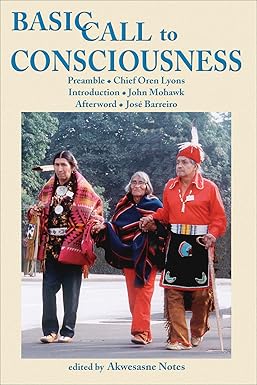
Published by The Haudenosaunee
on May 17, 2013
The Haudenosaunee (People of the Longhouse) Address to the Western World, offered to the UN in Geneva, Switzerland, May 17, 2013. This document comprises a powerful message given by the Hau de no sau nee (or traditional Six nations council at Onondaga) also called the Iroquois Confederacy to the Non-governmental Organizations (NGOs) of the United Nations. In an unprecedented move, the UN meeting was relocated to Geneva, Switzerland to bypass illegal impediments implemented by the settler-colonial regime in Washington D.C., which did not want this message of peace and understanding to go out.
Civil Disobedience

Thoreau argues that individuals should not permit governments to overrule or atrophy their consciences, and that they have a moral duty to avoid allowing a government to make them the agents of injustice. Thoreau was motivated to write this essay by his disgust with the U.S. system of enslavement and the illegal land grab commonly referred to in the U.S. as the Mexican-American War (1846-1848), and in Mexico as the Intervención Estadounidense en México (U.S. intervention into Mexico).

The seminal work on public education by one of the most important scholars of the century.
I Heard It Through the Grapevine
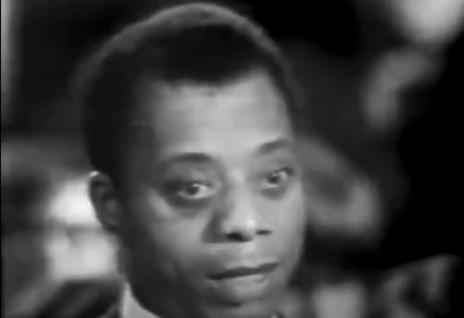
In the film “I Heard It Through the Grapevine,” Baldwin traveled south to find out what really became of Black Americans after the protest movements of the nineteen-sixties.
James Baldwin Debates William F. Buckley (1965)
A classic debate between a fearless fighter for universal beauty, justice and truth, and an articulate and outspoken racist.

Published by Bertrand Russell
on Dec 1, 1903
Like most people whose ideas were ahead of their times (or at least ahead of the cherished prejudices of the conventional), Bertrand Russell held many unpopular and controversial views, however his logic was invariably difficult or impossible to refute. In a Free Man’s Worship, Russell peers unblinkingly into the infinite void and arrives at a discomforting conclusion. He thought that evidence gathered through the scientific method of inquiry indicated that we live in a universe without purpose or plan. He felt that the Laws of Thermodynamics predict that the universe will end in an entropic death, and no matter how humans may strive, their own end, decreed by nature, is certain. Yet, Russell believed that humans may have some freedom of choice. he thought we might ge able to assert a ‘subtle mastery over the thoughtless...
UN Universal Declaration of Human Rights

The Universal Declaration of Human Rights (UDHR) is a milestone document in the history of human rights.