

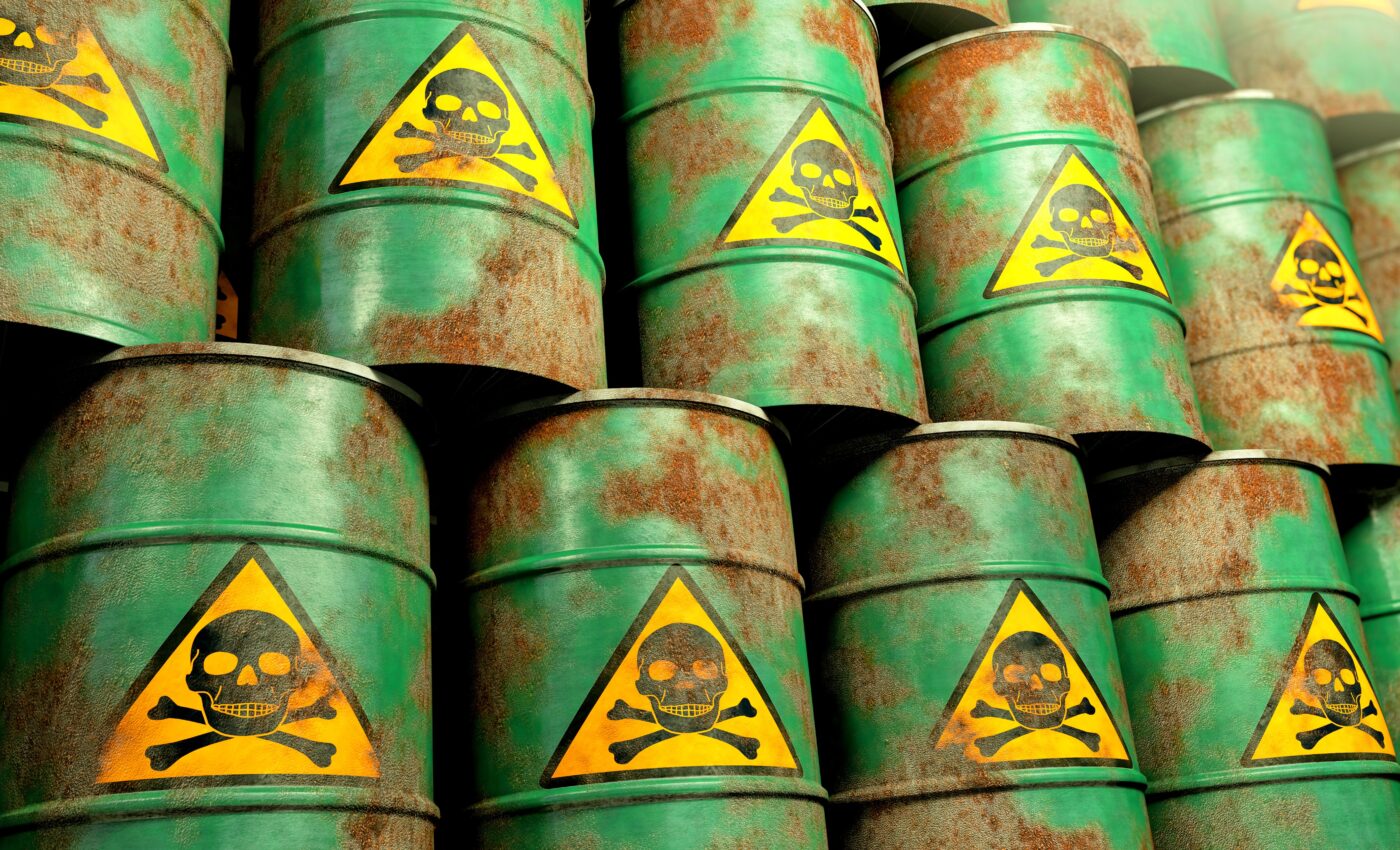
Forever Chemicals
Forever chemicals (PFAS) are a group of synthetic chemicals that are highly resistant to degradation. They persist and accumulate in the global environment for thousands of years causing widespread heath harm to humans and other life.
Common Uses of PFAS
PFAS are found in a wide range of everyday products, including:
- Nonstick cookware. such as Teflon
- Stain-resistant fabrics, furniture and carpets
- Food packaging, in particular fast-food wrappers
- Firefighting foams
- Waterproof clothing
- Camping gear
- Toilet paper
- Electronic components
Health Risks Associated with PFAS
Exposure to PFAS has been linked to several health issues, including:
- Increased risk of cancers, including kidney and testicular cancer
- Immune system effects
- Hormonal disruptions
- Liver and thyroid problems
- Reproductive harm and developmental issues in children
Exposure Pathways
People can be exposed to PFAS through various means:
- Consuming contaminated food and water
- Using products that contain PFAS
- Inhaling contaminated air
Environmental Impact
PFAS contamination is global, affecting water, soil, and wildlife. It accumulates in the food chain, posing risks to ecosystems and human health. Efforts are ongoing to regulate and reduce PFAS usage, but regulatory capture and government corruption continues to limit progress.
What You Can Do Now
- Choose textiles and carpeting without water- and stain-repellents.
- Avoid food in contact with greaseproof packaging, such as microwave popcorn and some fast foods.
- Avoid personal care products with “perfluor-“, “polyfluor-“, and “PTFE” on the label.
- Purchase cast iron, glass, or ceramic cookware rather than Teflon.
- Only purchase waterproof gear when you really need it.
- Note that “PFOA free” products often use similar chemicals.
- Support campaigns forcing those controlling irresponsible companies to change their behavior and to pay for the damage they have already done.
- Support companies that have committed to phasing out highly fluorinated chemicals.
Key Facts
- In the US, synthetic chemicals are not reviewed by an independent agency before being promoted for use and released into the environment. It is typically only after extensive harm has been proven in a court of law that real regulation can begin. Irresponsible actors therefore have a perverse incentive to cover up the dangers of their products.
- Per- and polyfluoroalkyl substances (PFAS), sometimes referred to as highly fluorinated chemicals or PFCs, are used in many consumer products and industrial applications because of their oil-, stain-, and water-repellent properties. Examples of chemicals in this class include PFOA, PFOS, and more than 10,000 related compounds.
- PFAS may be found in carpets, cleaners, clothing, cookware, cosmetics, electronics, food packaging, furnishings, outdoor apparel, paints, papers, protective coatings and sealants, and firefighting foams.
- Due to concerns about their health harms, governments and companies have begun phasing out the use of PFAS in textiles, food packaging, cosmetics, and fire fighting foam. In 2020 the carpet industry voluntarily stopped using PFAS in most products.
- PFAS have been linked to kidney and testicular cancer, elevated cholesterol, decreased fertility, thyroid problems, and liver disease as well as decreased immune response to vaccines in children.
- Humans are exposed to PFAS through contaminated food, drinking water, air and dust. Products in our homes and workplaces that contain these chemicals contribute to our exposure. PFAS are found in the bodies of 99% or more of all people in the US.
- PFAS do not break down in the environment. Because of their extreme persistence, they are transported around the world and have polluted even the most remote locations.
- Industies have rebranded several so-called “long-chain” PFASm which were phased out due to their potential for health harm. They have been replaced by numerous “short-chain” and other related chemicals that are equally persistent and may pose similar health risks. To prevent such “regrettable substitutions”, the entire class of PFAS--including fluoropolymers and fluorinated gases--should be eliminated.
| Key Events related to Forever Chemicals | ||
|---|---|---|
|
1934
|
PCTFE discoveredThe first form of PFAS, polychlorotrifluoroethylene (PCTFE), is discovered by Fritz Schloffer and Otto Scherer at the German chemical conglomerate IG Farben. |
|
|
1938
|
PTEE accidentally discoveredRoy J. Plunkett and Jack Rebok accidentally discover polytetrafluoroethylene (PTFE) when a frozen, compressed sample of the chemical fluorocarbon tetrafluoroethylene spontaneously forms a white, waxy solid. |
|
|
1945
|
DuPont trademarks PTFE as Teflon |
|
|
1961
|
Internal company warningAn internal company report revealed that Teflon’s Chief of Toxicology discovered that Teflon materials had “the ability to increase the size of the liver of rats at low doses,” and warned that the chemicals “be handled ‘with extreme care’ and that ‘contact with the skin should be strictly avoided.’” |
|
|
1970
|
Suppressed report finds PFAS highly toxicAn internal memo from DuPont-funded Haskell Laboratory declared C8 (one of thousands of PFAS) as “highly toxic when inhaled and moderately toxic when ingested.” |
|
|
1979
|
Dogs die within days of exposure to PFOAIn a cruel experiment, Haskell labs finds that dogs exposed to a single dose of PFOA “died two days after ingestion.” |
|
|
1980
|
DuPont lies to its employeesDuPont and 3M discovered two birth defects among eight pregnant employees working in C8 manufacturing. However, they failed to disclose this finding or inform their employees about it. In a contradictory move, an internal memo in the following year claimed, “We know of no evidence of birth defects caused by C-8 at DuPont.” DuPont reassured its employees by comparing the toxicity of C8 to that of table salt. |
|
|
1991
|
DuPont lies againDuPont downplayed reports of PFAS groundwater contamination near one of their plants in a press release, stating, “C-8 has no known toxic or ill health effects in humans at concentration levels detected.” |
|
|
1998
|
DuPont pressures the EPALitigation begins with a lawsuit against DuPont for cattle losses near a PFOA-contaminated landfill. As such lawsuits raised public attention to PFAS contamination, DuPont contacts the EPA, pushing for a swift public statement. They urged, “We need EPA to quickly (like first thing tomorrow) say the following: That consumer products sold under the Teflon brand are safe and to date there are no human health effects known to be caused by PFOA.” |
|
|
2001
|
Another major lawsuit against DuPontA class action lawsuit is filed against DuPont on behalf of 70,000 residents near the Washington Works plant. |
|
|
2004
|
EPA fines DuPonthe EPA penalized DuPont for withholding their findings on PFOA. Despite the $16.45 million settlement being the largest civil penalty under U.S. environmental statutes at the time, it constituted a mere fraction of DuPont’s $1 billion annual revenues from PFOA and C8 in 2005. |
|
|
2005
|
DuPont settlementDuPont reaches a $16.5 million settlement with the EPA for environmental violations and settles the 2001 class action for up to $235 million for medical monitoring. |
|
|
2006
|
Voluntary agreement to phase-out PFAS manufacturingA voluntary agreement between the EPA and major companies leads to the gradual phase-out of PFAS in US manufacturing. |
|
|
2012
|
PFAS exposure linked to six diseasesAn EPA epidemiological study links PFAS exposure to six diseases in residents near DuPont’s Washington Works plant. |
|
|
2015
|
DuPont spinoffChemours is spun off from E.I. DuPont de Nemours and Co. |
|
|
2016
|
Initial EPA health advisoriesThe EPA issues initial health advisories for PFOA and PFOS, setting a combined limit of 70 parts per trillion (ppt). |
|
|
2017
|
DuPont settles another lawsuitPFA MDL litigation involving 3,550 plaintiffs with personal injury claims against DuPont are settled for $670 million. |
|
|
2019
|
California catches up with EuropeThe California Building Standards Commission follows the lead of European countries by unanimously voting to update the state’s building codes to allow the use of foam plastic building insulation without flame retardant. |
|
|
2020
|
Michigan lawsuitMichigan Attorney General files a PFA contamination lawsuit against 17 defendants, including 3M. |
|
|
2020
|
3M announces intent to end PFAS production3M announces its intent to end PFOA and PFOS manufacturing by the end of 2025. |
|
|
Jan
22
2021
|
Ohio settlementDuPont, Corteva, and Chemours commit $1.185 billion to resolve PFAS liabilities and $83 million to settle Ohio MDL claims. |
|
|
Mar 2021
|
Scientists implore the EPA to act on the dangers of PFAS exposureOver sixty leading PFAS science experts submit a letter to the newly-confirmed EPA Administrator Michael Regan calling on him to institute a class-based ban on all PFAS except essential uses. |
|
|
Mar
2
2021
|
3M attempts to move litigation to federal court3M argues in Michigan federal court that a PFAS lawsuit should be moved from state to federal court. |
|
|
May 2022
|
Many eco-friendly children’s textiles found to contain toxic PFAS chemicalsA new study finds clothing, bedding, and furniture labeled as water- or stain-resistant is most likely to have PFAS. |
|
|
Jun
15
2022
|
EPA revised advisoriesThe EPA issues revised, stricter health advisories for PFAS, indicating effectively no safe level for PFOA and PFOS. |
|
|
Mar 2023
|
EPA proposes PFAS drinking water standardsThe EPA proposes the first national drinking water standards for PFOA and PFOS, and announces its intention to regulate additional PFAS. |
|
|
Jun
22
2023
|
3M settlement3M reaches a settlement agreement between $10.3 billion to $12.5 billion with cities, towns, and public water systems for PFAS contamination. |
|
|
Apr 2024
|
US EPA establishes limits on PFAS chemicals in water suppliesThe EPA announced drinking water standards for six PFAS chemicals, marking the first time in more than 20 years the federal agency has set an enforceable limit on a new unregulated drinking water contaminant. |
|
|
Aug
4
2025
|
New Jersey settlementNew Jersey Attorney General Matthew Platkin and Department of Environmental Protection Commissioner Shawn LaTourette announced a landmark $2B settlement with E.I. du Pont de Nemours to resolve PFAS contamination at several locations in the state. The includes a $875m settlement in natural resources damages and a commitment from DuPont to fund abatement projects and full clean-up of the impacted sites. |
|
|
Mar 2026
|
Oral-B stops using Teflon in Glide dental flossThe change comes after years of public and scientific scrutiny, sparked by a landmark study by Silent Spring identifying dental floss as a potential source of PFAS exposure. |
|
Related Books
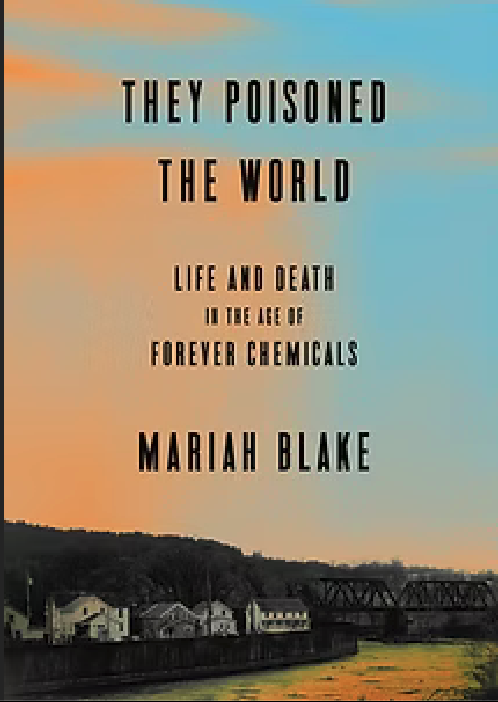
They Poisoned the World: Life and Death in the Age of Forever Chemicals
A gripping investigation of the chemical industry’s decades-long campaign to hide the dangers of forever chemicals, told through the story of a small town on the frontlines of an epic public health crisis.
Shortlisted for the J. Anthony Lukas Prize • Finalist for the Pen/E.O Wilson Literary Science Writing Award, the Los Angeles Times Book Prize, and an Edgar Award from Mystery Writers of America.
Shortlisted for the J. Anthony Lukas Prize • Finalist for the Pen/E.O Wilson Literary Science Writing Award, the Los Angeles Times Book Prize, and an Edgar Award from Mystery Writers of America.
People and organizations working on this issue

Earth.com is for those who care about our planet and environment and want to make a difference.

The Green Science Policy Institute’s mission is to facilitate safer use of chemicals to protect human and ecological health. They educate and build partnerships among government, business, academia, and public interest groups to develop innovative solutions for reducing harmful chemicals in products.

The Six Classes is a program of the Green Science Policy Institute, whose aim is to reduce the use of harmful chemicals in consumer and other products. It focuses on entire classes or groups of chemicals of concern, rather than phasing out problematic chemicals one at a time.

Silent Spring Institute is the leading scientific research organization dedicated to uncovering the links between chemicals in our everyday environment and women’s health, with a focus on breast cancer prevention.
Published: Jun 25, 2026